Showing posts with label Duck. Show all posts

Sunday, February 9, 2014

Crispy Duck Confit Pasta with Morel and Spinach Cream Sauce [Zack]

If spaghetti carbonara is the king of pasta, and bucatini amitriciana is the queen, then duck confit pasta with morel cream sauce could very well be the prince.  There are a lot of elements in this dish that mimic the savory deliciousness of carbonara:  crispy duck confit = bacon, parm reggiano = pecorino cheese, and creamy egg yolk = creamy egg yolk.

I used a good amount of chicken stock to add flavor and to replace a portion of the cream.  I found jarred morels, but if you can find fresh ones, that's even better.

In case you need a recipe on how to make homemade duck confit, check out my recipe.


Process:

Take your duck confit out of the fat and place it skin down in a cold pan.  Start the pan over medium-low heat to render the fat from the skin and to crisp it up.


Break the duck leg apart with a spatula so you can crisp maximum surface area.


Cook for about 10 minutes after you break it up, making sure to turn it over every few minutes.


Slice your shallots, chop your morels, and wash your spinach.


Start the shallots in a pan with 1T of garlic butter and a little bit of olive oil over medium heat.  Saute until they develop a little bit of color.  Add in the morels and the spinach.  Cook for another 5 minutes until the spinach has mostly wilted.


Add in your cream and chicken stock, and reduce for another 5 minutes.  Throw in the grated cheese.


Cook your pasta al dente according to the directions on the package.


Toss the cooked pasta in the sauce, top with the duck confit, crack black pepper all over, and serve with an egg yolk per portion.


Ingredients:
.5 lb / 250g pasta
4/5 cup / 200 ml chicken stock
2T cream
1/2 cup grated reggiano
1 cup chopped morels
3 shallots
1T garlic butter (or 1T butter, 2 cloves garlic, mashed to combine)
2 egg yolks
cracked black pepper

Song - I said prince of pasta, not Prince, but oh well here goes anyways:  Prince - Breakfast Can Wait

Friday, March 2, 2012

Confit de Canard - Duck Leg Confit [Zack]

What is confit?

Confit is a fancy french word for slowly poaching meat (usually duck meat) in fat.  For duck or goose leg confit, you slowly simmer the legs in goose fat.

Confit seems very intense - why should I try it?

Duck leg confit is one of the most flavorful and enjoyable meals you can make.  If you are busy, you can make a large batch and store it in the fat in your fridge for MONTHS.  Then if you are too busy to cook one night, pull the legs out of the fat, place them in a low pan to crisp the skin and warm the meat through.  Toss a salad and you are finished!

Well, is it difficult?

It's not actually that hard, it just takes a bit of planning and a lazy weekend day that you can spend cooking.

You cure the duck legs in the fridge (i.e. rub them with salt) and then slowly poach them in fat (i.e. place them in a pot, cover with duck fat or olive oil and put the heat on low and wait for 3 hours).

Why goose fat?

Goose fat is God's gift to mankind because we have to deal with pain and suffering in this world.  Either cook some confit in it or roast some potatoes with it.  You'll know what I mean.

Where can I find goose fat?

You can find it in a premium grocery store.  Or you can render it yourself by buying a whole duck, removing the breasts for another use, reserving the legs for the recipe, and roasting the bones and skin in the oven at 250 F / 125 C.  Or you can just use olive oil.


If you haven’t tried confit before, I firmly suggest that you dive right in and make a large batch.  I did my first batch with only 2 legs and immediately regretted not making more after my first bite.  It’s more economical to make a large batch– it takes the same amount of time, you use less oil, less heat energy, and you have more leftovers that last a long time in your fridge. 

If you are nervous about how long it will take, I put some notes of how a typical Saturday / Sunday would look making confit.

Process (Saturday – i.e. The day before the main event):

[10:00 am] go shopping for groceries.  Pick up a few ducks and some extra legs at the really cool butcher market

[11:00 am] return home from shopping, put the groceries for the week away, grab the ducks you plan on separating

If you bought a full duck or 2, you have a bit of work to do.  Look for the section at the end of the post on how to separate out the breast and legs.


[11:15 am] you have separated out the duck legs and breasts and have popped the rest of it in the oven to render the fat

[11:20 am] mix together the cure in a bowl.  You want to cure the legs for flavor.


Combine your sea salt, thyme leaves, chopped garlic, and ground pepper into a bowl and mix.  


[11:25 am] rub a generous amount of salt onto both sides of the legs, making sure to get the inside of the legs well.  Place them skin-side down into a baking dish or container and pack them well together.  Wrap with saran wrap and place in the fridge.

[11:30 am] go do something else

[12:00 pm] pull the duck carcass out and pour the fat into a jar and stick it in the fridge.  Stick the bones in the freezer for stock later.

Let them cure in your fridge for 12 – 24 hours.


Sunday afternoon – the day of the great confit:

[2:00 pm]  get the duck legs out of the fridge and wipe off the cure with a paper towel

[2:05 pm]  arrange the legs in a large heavy-bottomed stock pot, and cover with the duck fat (or olive oil).


Add a few unpeeled garlic cloves - if your duck fat was in the fridge, it may have solidified.  No problem!  Turn it on to low heat and walk away for 20 minutes.


[2:30 pm]  check back to see if the oil is slowly bubbling (simmering).  Go turn on a movie or chase the kids around.

[3:00 pm]  time for a quick stretch – put the movie on pause and check to see if it’s still slowly bubbling.  If yes, say something about how good of a cook you are.  If no, discreetly adjust the heat and then say the same thing.

[3:30 pm]  another check – maybe give it a stir if one leg is partially sticking out

[4:00 pm]  still good?

[4:30 pm]  you guessed it.  Check and stir.

[5:00 pm]  take a knife out and prick a leg. It should pass through fairly easily (like pulled pork).  Remove the pot from the heat and let it cool off (should take a while).


[5:30 pm]  remove the legs to a tupperware and cover them with the cooking fat.  These will keep for a few months in your fridge (the fat will solidify and preserve the legs), ready to be used when you need them.


A random crazy weeknight that you want to eat the confit:

When you want to cook a few legs, take the container out of the fridge and wipe the fat off the leg with your hands.   Place it into a cold pan set on low and slowly brown the skin.


Once the skin is crispy on one side, flip.  Serve once the meat is heated through!


The meat should pull like pulled pork, so you can even make a nice sandwich if you want!


Ingredients:
(for about 8 legs)
8 duck legs
4 T sea or kosher salt
cracked black pepper
1 minced shallot
1 T chopped rosemary or thyme
2 cloves chopped garlic

~3-4 cups duck fat (or olive oil, or a combination of both) - this depends on the size of your pot, just cover the legs with it.
5 whole garlic cloves

How to separate the breast and legs from the bird:

You’ll need to separate out the breast and legs from the body.  If you have ever carved a chicken or turkey, the anatomy is almost identical.  Start with the neck facing you and slice along the center bone of the chest (the bird’s sternum).  Cut down until you feel bone, then slowly separate the breast meat away from the bones following the line of the rib cage.  Cut all the way around the breast and make sure you don’t tear the skin.  The breast of the duck is super tasty if cooked correctly (i.e. just start it skin-side down in a cold pan, turn it on low and slowly render the skin.  Once it’s nicely browned, flip the breast over in the pan and pop it in the oven until it’s medium-rare.)

The next step is to separate the legs away from the carcass.  Wiggle them around a bit until you can see the outline of the leg.  Cut through the skin so the leg is fully covered with it (i.e. cut with the knife up against the ribs on the carcass).  Then find where the leg connects with the rest of the body (the duck’s hip), and place light pressure on it until it pops out of socket.  Cut right where it separated and it’s that easy!


Pop the rest of the bird into the oven at 300 F / 150 C to render the fat and give you materials for a free batch of duck stock.  You’ll probably get about 1 cup of duck fat per duck carcass – very economical!

Song:  Parliament:  I've Been Watching you 

Wednesday, September 7, 2011

Hoisin Duck Breast Salad [Zack]

Any time I order duck at a restaurant, it's either an amazing dish, or it's tough and not that tasty.  I think that most of it has to do with how it's cooked and the quality of the meat.  All of the fancy restaurants serve their duck breasts medium-rare (like a nice steak) and this seems to be one of the main keys to success.

This salad is different than your normal mixed greens vinaigrette.  The toughest part is judging when the duck breast is cooked, but you can always use a thermometer and let it come to 130F / 54C.

Process:

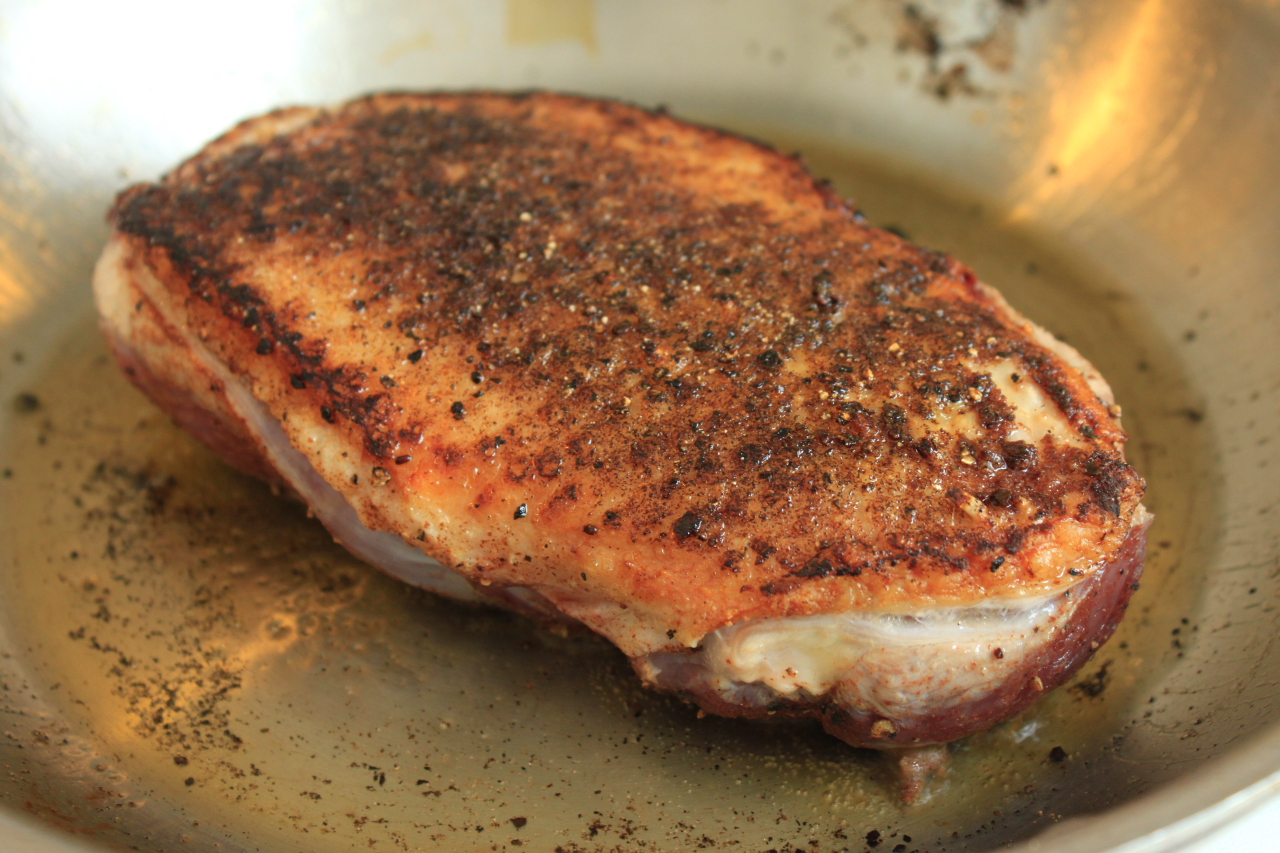
Start by taking the duck breast out of the fridge 30 minutes before you want to cook it so it comes to room temperature.  It will cook more evenly because it's an constant temperature throughout the meat (instead of being cold in the middle).  Put it on a plate and pat it dry so it will brown better in your pan.  You can score the skin in a cross-hatch pattern which would help it render more of the fat - I'll do this next time.  Rub it with paprika, salt, and pepper and set aside.


Dice up your ginger, shallots, and garlic.  In a small sauce pot on medium low heat, slowly sweat the shallots and ginger in the sesame oil.  After a few minutes, add the garlic and cook for an additional minute.


Then add in your hoisin sauce, vinegar, and sriracha.  Cook down for about 5 minutes so it's not runny and sticks to the spoon.


While the sauce is cooking down, put the ginger, garlic, shallot, chile, and vinegar to the food processor and blend until it's a smooth paste.  Then, add miso paste, honey, oils, and mayo in the food processor and blend again until you have a silky dressing.


Pre-heat your oven to 400F / 200C and start your oven-proof frying pan on medium low heat and let it come up to temperature for 10 minutes.  Add some sesame oil to the pan and place the duck breast skin side down.


Let the fat render for a few minutes until it's brown and crispy.


When the skin is nicely browned (in 6 - 9minutes), flip the duck breast over and coat with your hoisin sauce and sprinkle sesame seeds on top.


Place the whole pan into the oven and cook until medium-rare (6 - 10 minutes depending on the thickness of the meat).  Let it rest for 10 minutes so the juices distribute evenly through the meat and don't end up on your cutting board.  Slice thinly against the grain with your sharpest knife.


Toss your greens with the dressing and slice the avocado vertically and layer on top of the salad.  Add the sliced duck breast to the salad and go nuts with the sesame seeds!


Ingredients:
Serves 2-3 for a full meal or 4-6 for a small appetizer

1 duck breast with the skin on
paprika, salt, and pepper
Hoisin Glaze:
1/2 inch ginger
1 clove garlic
1 small shallot diced
2T Hoisin Sauce
1T Sriracha (or less if it's too spicy)
1/2 T Rice Wine Vinegar
1 tsp sesame oil

Salad Dressing:
1 T miso paste
2 T rice wine vinegar
1 T Kewpie Mayo
1/2 T honey
1/2 inch ginger
1 clove garlic
1 small shallot diced
1 small bird's eye chile
1 T sesame oil
2 T canola oil (or non-flavored oil)

Lettuce
1 avocado

Song to jam to:
Maxwell - Something Something